
A dream home starts with the right questions, not a floor plan.
Every homeowner I sit down with wants to jump straight to layouts and finishes — I get it, that's the fun part. But the custom builds that go smoothly, stay on budget, and actually fit the life you're living aren't the ones with the prettiest renderings. They're the ones where we worked through these ten questions together before a single line got drawn.
Square footage isn't the most useful number I can get from you — how you actually live is. Your mornings, how you entertain, whether you work from home, which rooms in your current place you never touch: that's what should shape the layout, not a show home you saw once.
A budget tells you what you can spend. Your goals tell you what you're actually building toward — and the two need to agree before design starts. A forever home and a five-year home lead to very different decisions on layout and finishes.
Your real budget is the all-in number — land, design, permits, construction, landscaping, furnishing — not just the construction quote. Get pre-approved financing early so you know what's achievable before you fall for a design you can't afford.
Cheaper windows, thin insulation, and a bargain mechanical system shave dollars off the quote today and cost you in energy bills and repairs for years after. The right question isn't what's cheapest to install — it's what's cheapest to own for the next fifteen or twenty years.
The lot you build on shapes or fights every decision in your design. Soil, slope, drainage, sun exposure, setbacks, and zoning all determine what's actually possible — a proper site assessment before design saves you from expensive revisions later.
When design happens in isolation from construction, you end up with beautiful drawings that turn out to be unbuildable or way over budget. Involve your builder during design, not after, so cost and constructability get checked at every stage — with one team accountable for both.
Design, permitting, material lead times, and our Manitoba weather all move at their own pace. Custom windows and specialty finishes alone can take months to arrive. Set a realistic timeline early, and know which parts of it can flex.
Unexpected costs aren't a sign something went wrong — they're normal. Setting aside ten to fifteen percent as a true contingency, kept separate from your upgrade wish list, is what turns a surprise into a manageable adjustment instead of a crisis.
Every municipality has its own setbacks, height limits, and energy code requirements — and finding them out after your design is finished is one of the most common causes of costly redesigns. Understand the real rules before design begins.
The home that's perfect for your life today may need to flex over the next ten or twenty years. A main-floor bedroom option, wider doorways, or a flex room cost very little to plan for now and a lot to add later.
These are the same ten questions I work through with every homeowner before design begins — getting them right early is what separates a smooth, on-budget build from a stressful one. If you'd like to talk through your project — your lifestyle, your goals, your lot, and your budget — I'd be glad to help.
Curious what to ask a builder before you hire one? Read How to Choose the Right Builder or Contractor.
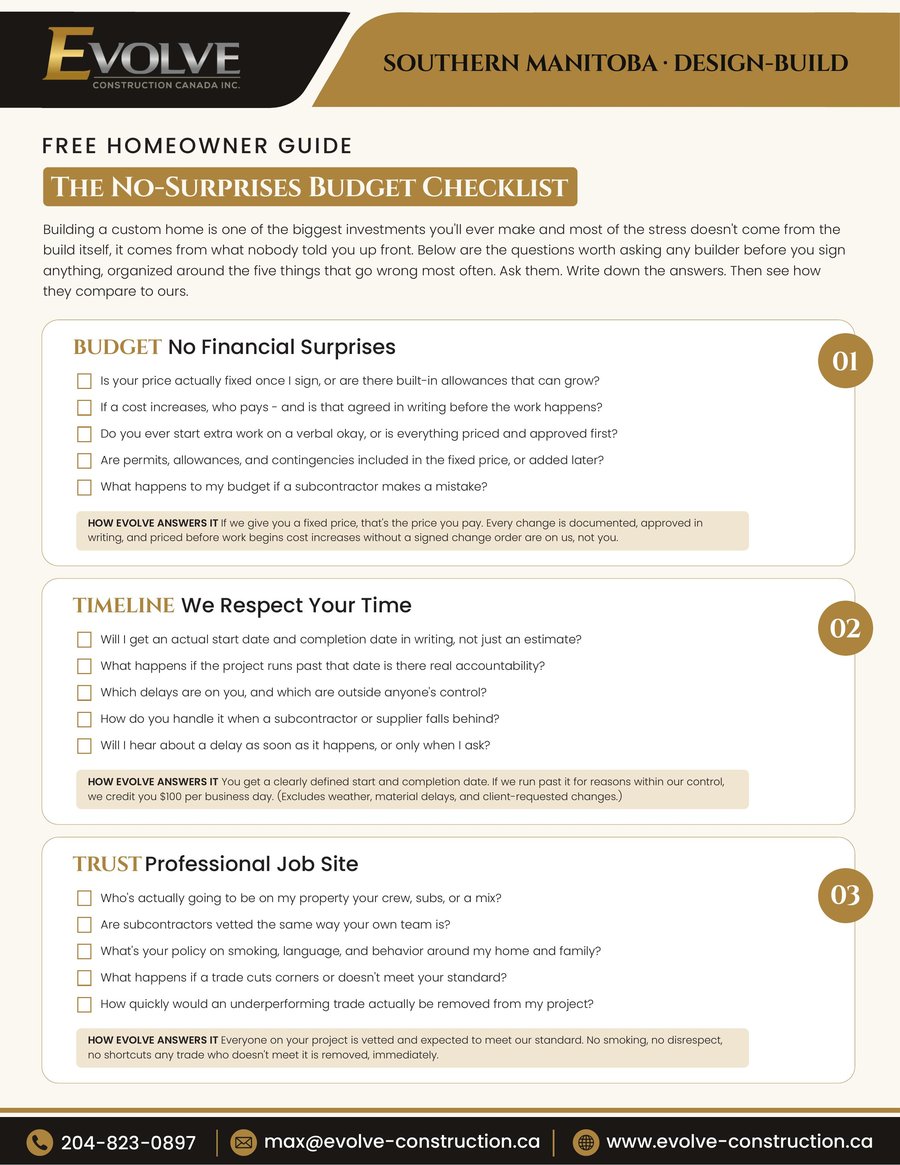
25 questions worth asking any builder before you sign anything — plus how Evolve answers every one.